In much of the world, it is not a voluntary process to switch to sustainable energy; the US, the EU and the UK for example have all enacted legislation banning fossil fuel transport and enforcing the obligatory reporting of carbon emissions and energy provenance. Its therefore no longer an issue of “IF” there are profits to be made, the question is now “by whom”? Of course, the large oil and gas companies are now urgently trying to restate their “green” credentials in an effort to win over the consumer; but the transformation is simply so great in number and so short in time, the potential earnings are virtually infinite.
It is important when comparing the “price” of energy to consider all of the various aspects involved. It’s easy to say “the sun is free” but Solar Panels and Batteries are not. However, two major costs are very definable:
Capital Costs – This is the amount of money required to build the generator, plant, solar farm, turbine or generator in the first place. Capital Costs for coal, waste to energy, wave/tidal, offshore wind and nuclear are high, they are lower for PV Solar, oil and gas.
Fuel Costs – This is the amount of money required to supply the generator, plant, solar farm, turbine or generatot with fuel to provide the electricity. Fuel Costs are high for oil, gas and coal, lower for Nuclear, and free for PV Solar.
The simple way of comparing the cost of constructing the various types of power station, is to compare the amount of kW the plant can produce in relation to the construction cost of the power plant (not including interest or land cost), this is referred to as the “Overnight Cost”.
Nuclear =
USD 7,000 per kW capacity.
Offshore Wind =
USD 5,000 per kW capacity.
Biomass =
USD 4,500 per kW capacity.
Coal =
USD 4,000 per kW capacity.
Hydro =
USD 3,000 – 10,000 per kW capacity.
Geo-Thermal =
USD 3,000 – 25,000 per kW capacity.
Solar PV =
USD 1,300 – 2,400 per kW capacity.
Apart from the obvious Capital Cost savings of a Solar PV power plant, and the fact that it incurs no fuel costs, there are a number of other relevant issues:
A Solar Farm needs little in the way of maintenance and staffing (apart from cleaning the panels) ; the sun shines, and power is produced. The same cannot be said for coal, oil and gas which in comparison need a high level of maintenance. Nuclear power is altogether another problem; even if running at a very small fraction of their capacity, they need to be manned to stop them overheating or worse.
Secondly, Solar is clean, it produces no carbon, and can generate for 20-30 years. Often, subsidized by governments, solar farms can also produce a profitable stream of Carbon Credits.
As inflation, pandemics, politics and war affect the availability and price of the fuel required to generate electricity (Ukraine/Russia/EU Gas/Oil supply for example), renewable energy solutions will not only be ecologically preferable, but indispensable.
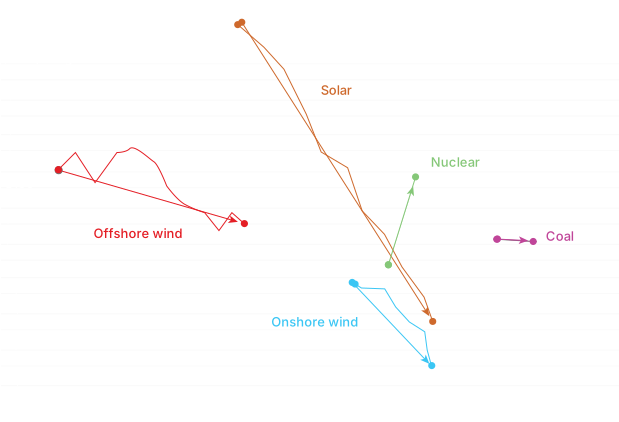
The trends in cost of energy generation are measured in terms of USD per kWh, and are even more encouraging for Solar:
Trends In Cost Of Energy (2010-2019)
Commulative installed capacity (gigawatts)
Source: IRENA 2020
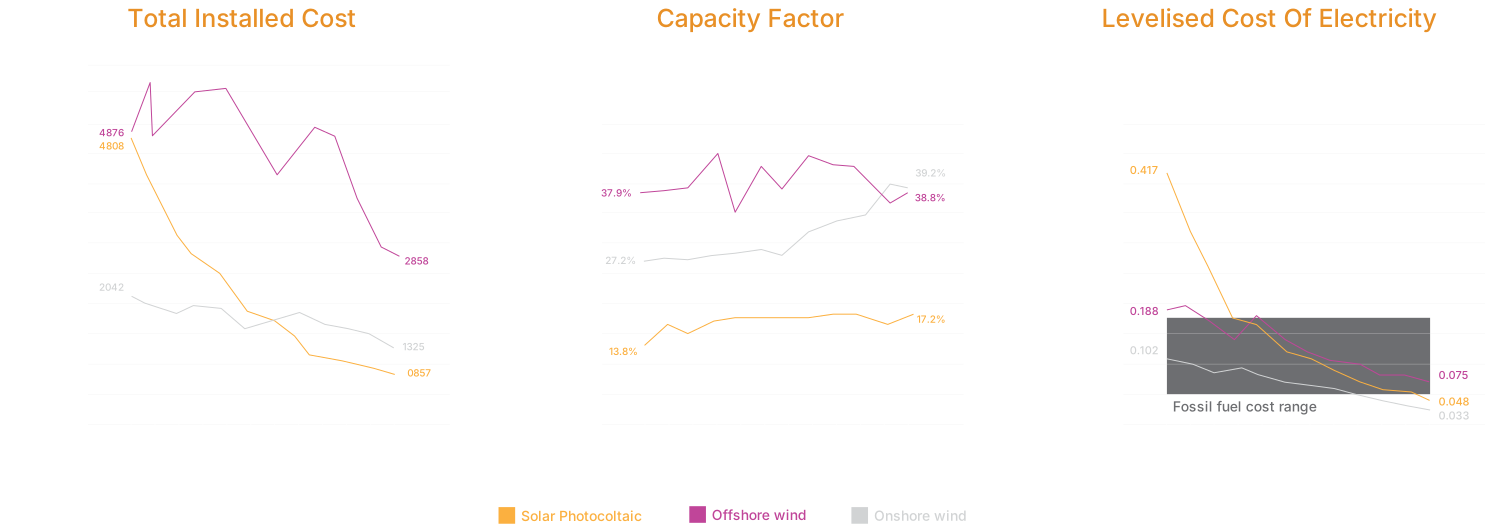
“The global weighted average levelized cost of electricity (LCOE) of newly commissioned utility-scale solar PV projects declined by 88% between 2010 and 2021”
IRENA 2022 Renewable Power Generation Report
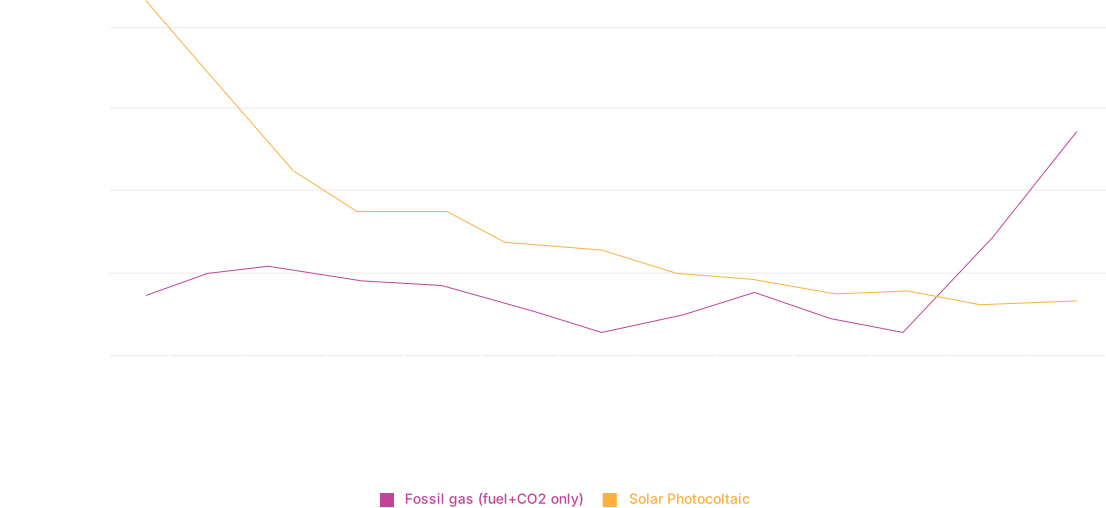
To illustrate the cost savings in solar energy generation in comparison to fossil fuels, the graph below shows the cost of producing 1 kWh:
“Marginal fossil fuel electricity generating costs are so high in 2022 that renewable projects added in 2021 could return many times their required annual capital repayments. An onshore wind plant - online on or before 1 January 2022 and able to capture the marginal fossil fuel generation costs in 2022 - might receive between twice (in Mexico) to thirteen times (in Brazil) the required annual return on capital for the year. Countries have not prioritised accelerated renewable power generation capacity deployment, but left the response largely to individuals and businesses, will likely cost society billions of dollars this year and the next in direct energy costs. This is before accounting for the macroeconomic damage that accrues from the fossil fuel price crisis”. IRENA 2022
RA-ESG foresees a more complex electrical grid system in the coming decade. The traditional “supplier and consumer” model is going to change to a bi-directional flow of energy that will be more akin to a flow of currency. As homeowners, businesses, entrepreneurs and privately owned companies start to generate their own energy, they will also sell back to the grid, this is causing a growing number of “brokers” to buy and sell clean energy. It is only a short step to a tokenised energy currency.
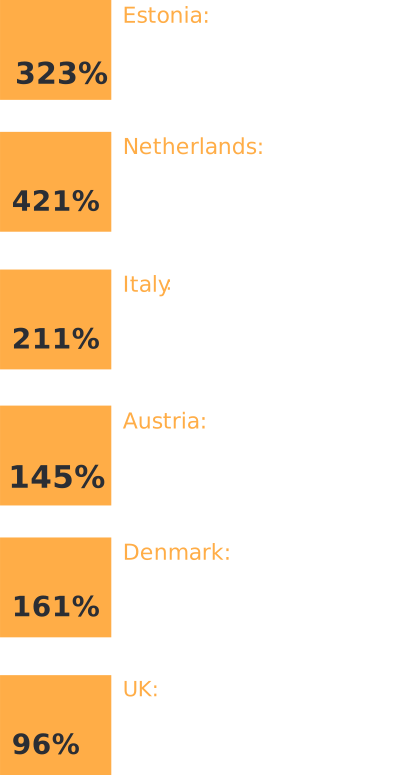
Governments, oil companies and reserve banks will resist this transition as it greatly decentralises power. But the EU has already recognised this and intends to put an end to the traditional monopolies by encouraging competitive energy exchanges to give consumers competitive pricing, efficient investment signals and greater supply security. In contrast, the following 5 countries have seen have experience stratospheric increases in their energy costs since the beginning of the energy crisis:
*1Despite the UK Energy Price Guarantee. The actual average price of 1kWh of electricity is £00.52p in the UK, this is capped by the government to £00.34p until July 2023.
EXAMPLES
To illustrate RA-ESG’s investment strategy it is easier to set out 4 diverse examples of RA-ESG’s application of funds:
Small Scale Solar
A Small Residential Solar PV And Battery Storage System In The UK.
The market size of the PV installation industry just in the United Kingdom grew by 48.5% in 2022 alone, but still only accounts for 6.8% of the renewable energy share of energy generation, it is likely that this will increase dramatically. Currently, there are approximately 1.2m homes with solar panel installation, and with the dramatic increases in the cost of energy, this is expected to rise significantly. To underline the growth curve; during the first six months of 2022, the UK posted 80% growth in new solar installations
A 100 MW Industrial / Infrastructure Solar Farm In Africa.
The capital cost of a 100 MW Solar Farm falls into three main components:
• Cost of Plant: Solar Panels, Sub-Stations, Inverters, Meters and Batteries. • Cost of Land: Freehold, leasehold, rented, donated or joint venture land acquisition. • Cost of Civil and Electrical Engineering: Technical studies, planning, land works, cabling, security, etc.
Distribution And Installation Of Electric Vehicle Charging Infrastructure.
EV Charging Station market size was valued at USD26b in 2023 and is set to grow by over 28% CAGR (Compound Annual Growth Rate) until 2032, reaching in excess of USD225nb.
• ChargePoint revenue grew 93% year on year last year. • In 2021, Shell had over 250,000 EV charging stations globally, a big increase from less than 50,000 in 2020. • ABB had over 400,000 EV charging stations as of 2021, an increase of more than 100% compared to 2020.
Funding Research And Development Of Solar Stand-Alone Charging Units.
Three opportunities exist to invest in the research and development of stand-alone solar charging units.
• The first opportunity is based on a 20’ cargo container-based solar array and battery storage solution. The product will adapt to two main scenarios;
Building sites, events, and temporary or emergency situations whereupon access to electricity is required but no grid is present (or the consumer has elected to only use clean/sustainable energy due to legislation, market perception of their brand, or ESG requirements under tender.
o Rural African, Middle Eastern and Asian communities whereupon a national grid is not available; such a product would supply power to medical, education, fresh water and law enforcement facilities. RA-ESG intends to work alongside various charities and non-profit organisations in a joint effort to bring energy, education and medical facilities to previously disadvantaged and impoverished communities. The product is also very useful in emergency/disaster situations.
Funding a brighter, sustainable energy future that reaches every corner of the world. Together, we can power meaningful change and support the transition to cleaner, smarter energy.